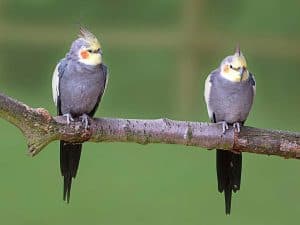
The male cockatiel is a highly social and vocal bird, making them one of the most popular pet birds in the world. In normal grey cockatiels, adult males and females are fairly easy to tell apart after the first molt, thanks to differences in face color, tail barring and behavior, but young birds and some color mutations are much harder to sex by eye. Let’s dig deeper into the differences of male and female cockatiel!
Key Takeaways
- Diet & Nutrition: Always verify that any new food is non-toxic and safe for cockatiels before feeding.
- Behavior & Care: Sudden changes in behavior or droppings require immediate attention.
- Environment: A clean, stimulating environment is essential for a cockatiel’s physical and mental well-being.
How to Distinguish a Male Cockatiel From a Female Cockatiel?
Generally speaking, an adult male normal grey cockatiel has a bright yellow face and vivid orange cheek patches, while an adult female has a greyer face and duller cheek patches. Females and young birds of both sexes also have yellow or white barring on the underside of the tail feathers and spots under the wings, which adult males lose. These differences usually appear after the first molt, at around 6-9 months of age. Crest size and shape are not a reliable way to tell the sexes apart, and in mutations such as lutino, pied, pearl and albino (whiteface lutino) the visual cues can be unreliable, so a DNA test is the way to be sure.
In addition to physical differences, male cockatiels are known for their distinctive calls and songs. While both genders of the species sing and communicate, males tend to whistle, sing and mimic more, while females are usually quieter. Both sexes hiss when they feel frightened or defensive, so hissing is not a sign that a bird is female. Male cockatiels may also have a more varied repertoire of calls and songs than females, regardless if they are wild cockatiels or not.
Another aspect of male and female cockatiel differences is behavior. Male cockatiels can often be more active, curious, and assertive than their female counterparts. They are sexually dimorphic and male adult cockatiels are known to display courtship behavior when they are interested in a mate, such as bowing and vocalizations. Additionally, they may perform a head bobbing dance and spread their wings to show off their vibrant feathers.
Finally, one of the most reliable ways of determining the sex of your cockatiel is through DNA testing. This method can provide an accurate answer within days and is highly recommended for bird owners who require certainty about their cockatiel’s gender (learn more about DNA testing for birds)**.
Overall, adult male normal grey cockatiels are relatively easy to identify due to their bright facial plumage and distinctive behavior, but young birds and many mutations are much harder to call. If you still have doubts about the sex of your bird, DNA testing is an excellent way to confirm the identity of your pet cockatiel (read more about identifying cockatiels)**. With that being said, it is important for owners to remember that all birds, regardless of gender, have their own unique personalities and traits.
No matter what sex your cockatiel is, taking the time to interact with it on a regular basis will help you better understand its individual behavior and character (tips for understanding cockatiel behavior)**. With enough love and attention, your pet cockatiel can be a delightful companion for many years to come.
Can Cockatiels Get Pregnant Without a Male?
No, cockatiels cannot get pregnant without a male. Cockatiels are monogamous birds that require the presence of both a male and female to reproduce successfully (learn about cockatiel breeding)**. In nature, they usually form pairs with other members of their species and remain together for life. Therefore, it is not possible for a female cockatiel to become pregnant without the presence of a male.
However, some female cockatiels may display signs of egg-laying behavior even if there is no male present (understand egg-laying behavior)**. This is because the female’s hormones can become out of balance due to environmental stressors or malnutrition, triggering her body to think it is time to lay eggs. If this happens, it is important to take your cockatiel to the vet as soon as possible for a thorough examination.
Although it is not possible for female cockatiels to become pregnant without the presence of a male, some may still demonstrate signs of egg-laying behavior due to hormonal imbalances (find out more about hormonal imbalances in cockatiels). If you notice any abnormal behaviors in your pet bird, it is important to take it to the vet for a thorough examination.

Is It Okay To Put Two Male Cockatiels In One Cage?
It is not recommended to put two male cockatiels in one cage. Male cockatiels may be territorial and competitive, which could lead to aggressive behavior toward each other. If two males are housed together, they may fight for dominance or engage in physical disputes over food or perches. This can cause stress for the birds, leading to injuries and health problems.
In some cases, two male cockatiels may be able to live peacefully in the same cage when they are introduced at a young age or have similar personalities. However, it is still important to keep an eye on them and separate them if any signs of aggression arise.
The best option for housing two male cockatiels is to provide them with separate cages. This will give each bird its own space, reducing any potential competition or disputes between the two birds. Additionally, it is important to make sure that each cage has enough room for the birds to move around and perch comfortably.
Related: why does my cockatiel bob his head