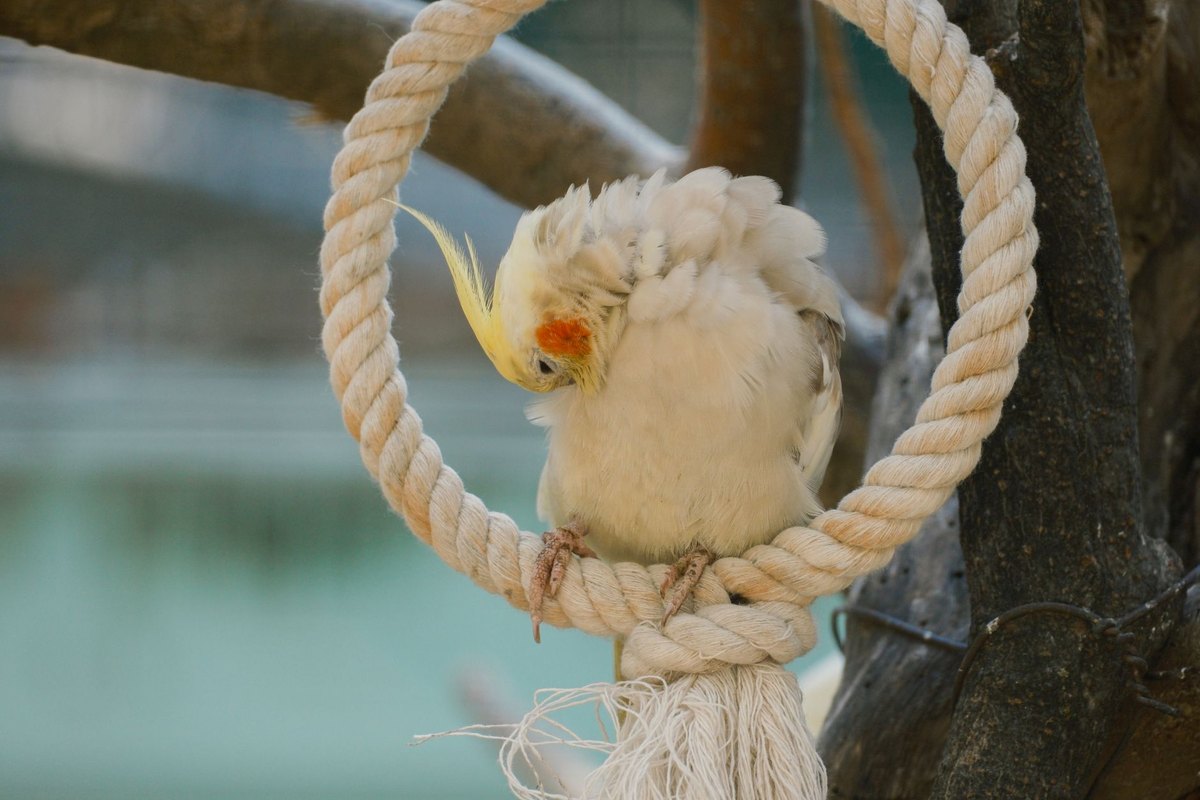
Quick answer: a cockatiel that puffs up briefly - while sleeping, preening, settling in, or just after a bath - is completely normal. A cockatiel that stays puffed up for hours, especially with its eyes closed, sitting low on both feet, and quiet, is showing the classic “sick bird look” and needs an avian vet. The difference isn’t the puffing itself. It’s how long it lasts and what comes with it.
Why cockatiels puff up at all
Fluffing traps a layer of warm air between the feathers and the skin. It’s your bird’s thermostat, and it doubles as body language. A healthy cockatiel puffs dozens of times a day for entirely ordinary reasons - and then smooths back down within seconds or minutes. That smoothing-back-down is the part that matters.
Normal puffing vs the sick bird look
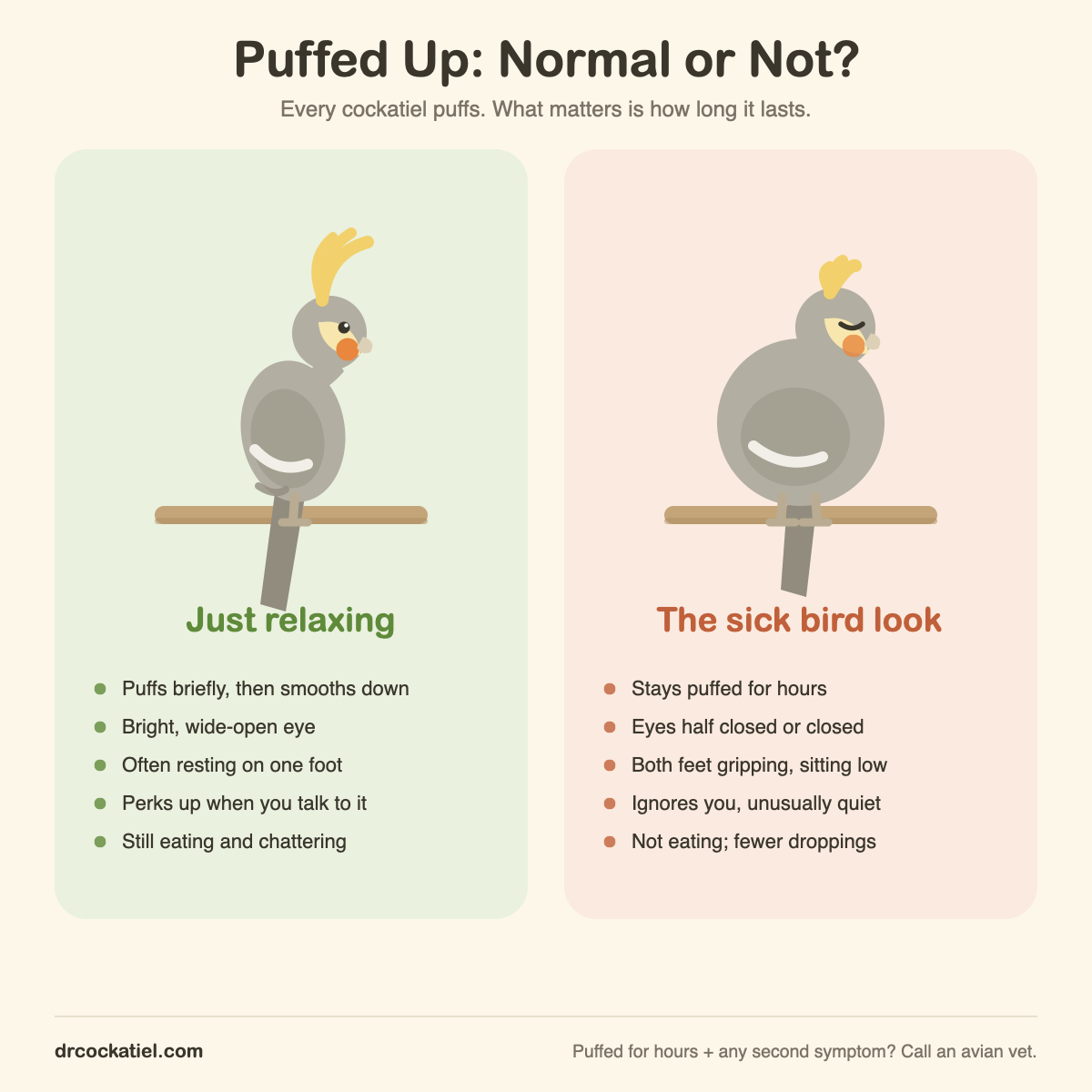
| Normal puffing | Concerning puffing |
|---|---|
| Brief - seconds to a few minutes | Sustained for hours, or all day |
| Bird smooths down when you approach or talk | Stays puffed even when you interact |
| Alert, bright eyes | Eyes half-closed or closed, dull |
| Perching normally, often on one foot | Gripping with both feet, low on the perch or on the cage floor |
| Still eating, chattering, active | Quiet, not eating, not interested in favourite things |
| Happens around sleep, preening, bathing | Happens at random times, all day |
A sick cockatiel puffs because it’s losing the ability to regulate its own temperature - the body is diverting energy to fighting illness. Because birds instinctively hide weakness (a sick bird in the wild is a target), by the time the puffing is obvious and constant, your cockatiel has usually been unwell for a while. That’s why this particular sign gets treated urgently.
Normal reasons your cockatiel is puffed up
- Sleeping or dozing. Puffed, one foot tucked up, beak turned back into the shoulder feathers - that’s a comfortable, healthy sleeping bird. More in how do cockatiels sleep?
- The post-preen shake. Birds fluff everything up and then shake it out to realign feathers. Completely routine.
- Feeling content. A relaxed cockatiel on a favourite perch, softly grinding its beak, often sits gently puffed. Beak grinding is a contentment signal - see the cockatiel body language guide.
- Drying off. After a bath or misting, expect a puffed, scruffy bird for a while.
- Briefly cold. A draught or a cool morning brings a temporary puff that resolves as the room warms.
- Moulting. Growing pin feathers are uncomfortable, and moulting birds often look fluffier and grumpier than usual for a few weeks.
- Display and courtship. Puffing paired with crest movement, strutting or singing is showing off, not sickness.
Warning signs that turn puffing into an emergency
Puffing alone is weak evidence. Puffing plus any of the following is a strong signal to book a vet:
- Sitting on the cage floor, or unable to stay on the perch
- Tail bobbing with each breath, open-mouth breathing, clicking or wheezing - see cockatiel breathing problems
- Not eating, or noticeably fewer droppings - check the cockatiel poop chart
- Discharge from nostrils or eyes, or crusty nostrils
- Weight loss - a bird can hide this under feathers until it’s severe, which is why a weekly weigh-in beats eyeballing it
- A hen straining, with a swollen abdomen - possible egg binding, which is a same-day emergency
- Vomiting, regurgitation stuck to head feathers, or a soiled vent
What to do while you arrange a vet visit
- Provide gentle warmth. A sick bird struggling to hold its temperature does better at around 26-29°C (80-85°F). A heat lamp on one side of the cage, or a heat pad under one corner, lets the bird move away if it gets too warm. Never enclose a bird with a heat source it can’t escape.
- Reduce stress. Dim lights, quiet room, no handling beyond what’s necessary.
- Make food and water easy to reach. Move dishes right next to where the bird is sitting - a weak bird may not climb for them.
- Keep the cage paper. Fresh droppings help your vet enormously.
- Call an avian vet. If you don’t have one yet, read how to find an avian vet - ideally before you need one.
Warmth buys time. It does not treat the underlying cause, and a genuinely sick cockatiel that seems to perk up in the warmth still needs examining.
FAQs
How long can a cockatiel stay puffed up before I worry?
As a rule of thumb: if your bird has been persistently puffed for more than a few hours while awake, isn’t smoothing down when you interact, and shows any second symptom, treat it as urgent. Waiting overnight to “see how it goes” is how many avoidable losses happen with small birds.
My cockatiel is puffed up and sleeping a lot during the day. Is that bad?
Some daytime napping is normal, especially in a bird not getting enough night rest - cockatiels need 10-12 hours of dark sleep, covered in how much sleep do cockatiels need? But a bird that sleeps through its normal active periods, puffed and unresponsive, is a sick bird until proven otherwise.
Is my cockatiel puffed up because it’s cold?
Possibly - cockatiels are comfortable in roughly 18-27°C (65-80°F) and will fluff in a cold draught. The test is simple: warm the room and watch. Cold-related puffing resolves; illness-related puffing doesn’t.
Why does my cockatiel puff up when I talk to it?
That’s usually a good sign - a relaxed greeting puff, often with beak grinding or a crest shift. Context tells you which it is: a bird that puffs and engages with you is happy; a bird that stays puffed and ignores you is not.
This guide is general information, not a diagnosis. Cockatiels conceal illness until it’s advanced, so when in doubt, an avian vet visit is always the safer choice.